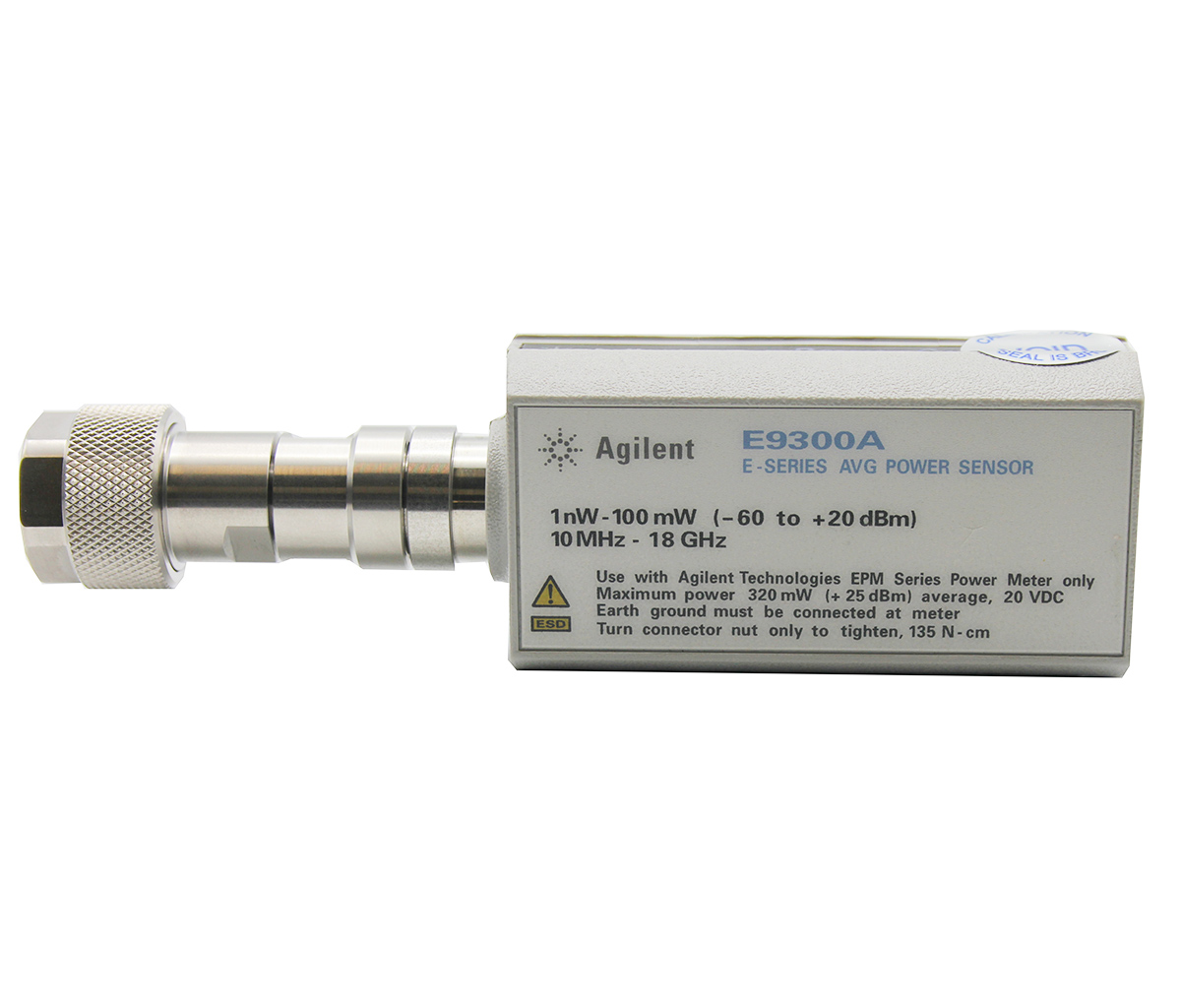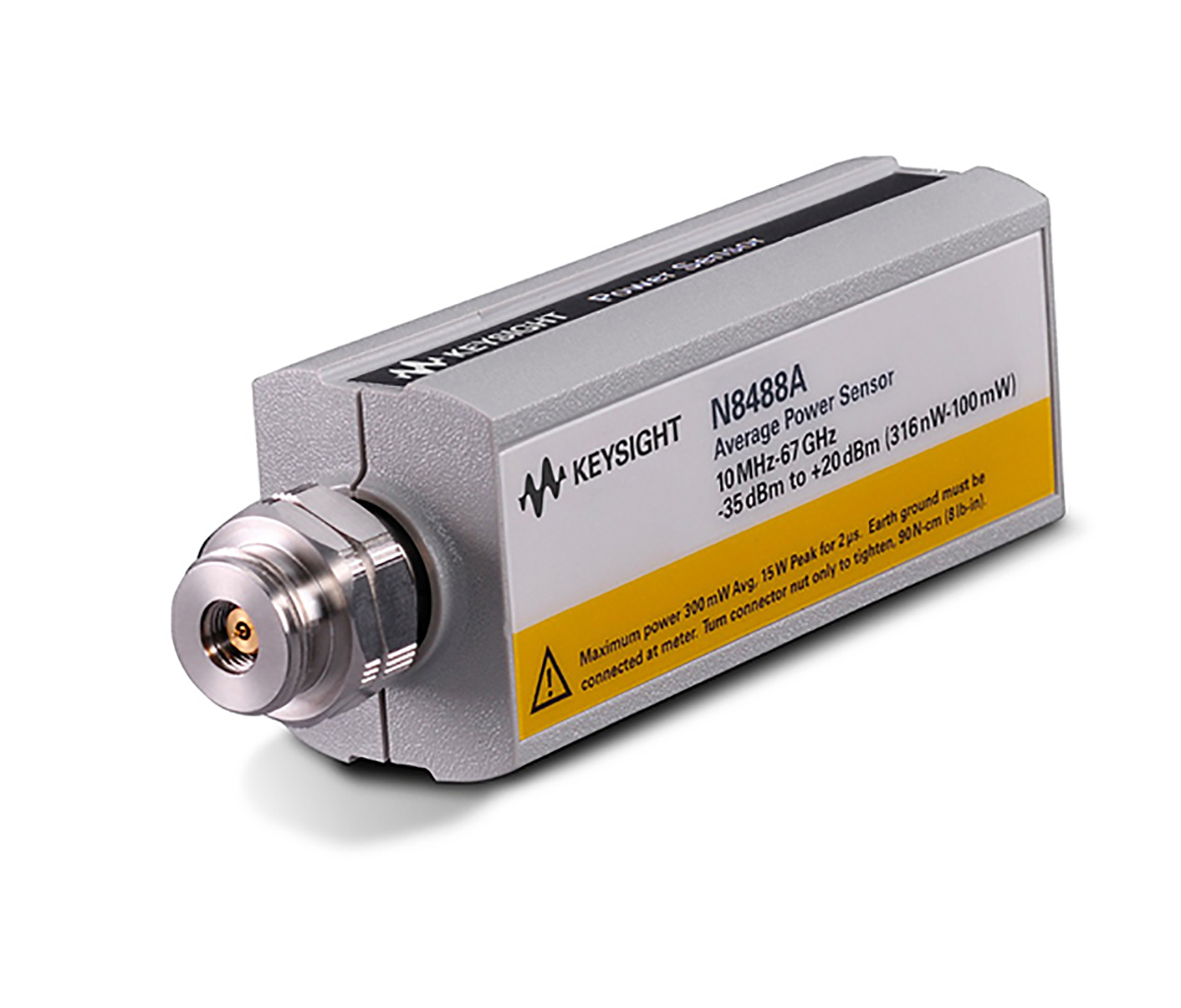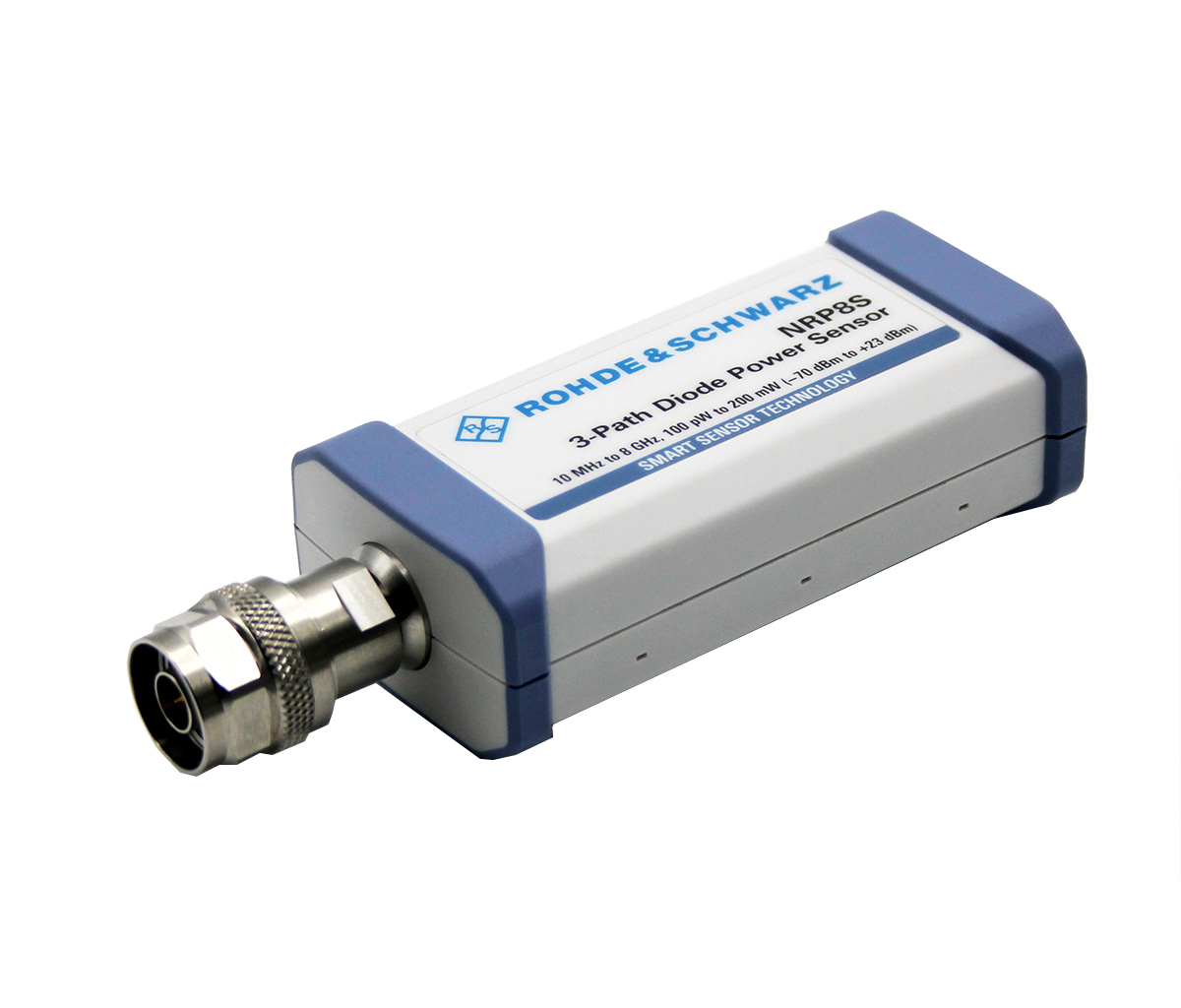


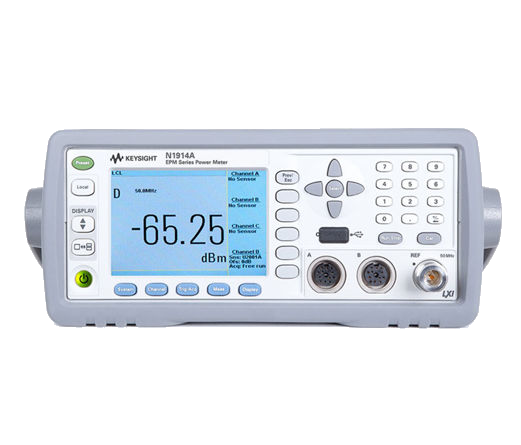
Keysight Technologies N1914A
EPM Series Dual-Channel Power Meter
Rent or Lease • Buy Used From $4,926
Key Features & Specifications:
* Frequency range of 9 kHz to 110 GHz (sensor dependent)
* Wide dynamic range of -70 to 44 dBm (sensor dependent)
* Speed improvement by 2X for E-Series sensors: up to 400 readings/sec
* Go beyond GPIB with LAN LXI-C and USB connectivity
* Code-compatible with E4418B, E4419B power meters
* Code-compatible with 436A, 437B and 438A power meters (option 200)
* Increased measurement channels: up to three channels with two additional U2000 Series power sensors connected using the optional USB hosts
* Automated frequency/power sweep measurements with the optional external trigger in/out feature
- Configurations
- Resources
- FAQsAI
--, 005, 101
See Configuration Details
-
005
Include power sensor cable, 11730A length 5-ft (1.5m)
-
101
Dual channel average power meter
Standard Rental Accessories*
* Leased or Buy Used product accessories will be confirmed with quote.
-
Cord Power
Qty: 1 -
Cable Power Meter
Qty: 2 -
Cable USB-A - USB-MiniB
Qty: 1 -
USB Drive with Software and Manuals
Qty: 1 -
USB Software I/O Libraries
Qty: 1
*This item has already been added to your cart. Check your cart for quantity and availability.
--, 201
See Configuration Details
-
201
Dual channel average power meter with VGA, trigger in/out, 1 front and 1 rear USB port
Standard Rental Accessories*
* Leased or Buy Used product accessories will be confirmed with quote.
-
Cord Power
Qty: 1 -
Cable Power Meter
Qty: 2 -
Cable USB-A - USB-MiniB
Qty: 1 -
USB Drive with Software and Manuals
Qty: 1
*This item has already been added to your cart. Check your cart for quantity and availability.
--, 200, 201, C01
See Configuration Details
-
201
Dual channel average power meter with VGA, trigger in/out, 1 front and 1 rear USB port
-
C01
Front calibrator, front sensor
-
200
Code compatibility for 438A
Standard Rental Accessories*
* Leased or Buy Used product accessories will be confirmed with quote.
-
Cord Power
Qty: 1 -
Cable Power Meter
Qty: 2 -
Cable USB-A - USB-MiniB
Qty: 1 -
USB Drive with Software and Manuals
Qty: 1
*This item has already been added to your cart. Check your cart for quantity and availability.
--, 167
See Configuration Details
-
167
Dual channel average power meter, trigger in/out, 1 front and 1 rear USB port
Standard Rental Accessories*
* Leased or Buy Used product accessories will be confirmed with quote.
-
Cord Power
Qty: 1 -
Cable Power Meter
Qty: 2 -
Cable USB-A - USB-MiniB
Qty: 1 -
USB Drive with Software and Manuals
Qty: 1 -
USB Software I/O Libraries
Qty: 1
*This item has already been added to your cart. Check your cart for quantity and availability.
--, 201, C01
See Configuration Details
-
201
Dual channel average power meter with VGA, trigger in/out, 1 front and 1 rear USB port
-
C01
Front calibrator, front sensor
Standard Rental Accessories*
* Leased or Buy Used product accessories will be confirmed with quote.
-
Cord Power
Qty: 1 -
Cable Power Meter
Qty: 2 -
Cable USB-A - USB-MiniB
Qty: 1 -
USB Drive with Software and Manuals
Qty: 1 -
USB Software I/O Libraries
Qty: 1
*This item has already been added to your cart. Check your cart for quantity and availability.
--, 005, 101, N6902A-1FP
See Configuration Details
-
005
Include power sensor cable, 11730A length 5-ft (1.5m)
-
101
Dual channel average power meter
-
N6902A-1FP
Code compatibility for 438A, fixed perpetual license
Standard Rental Accessories*
* Leased or Buy Used product accessories will be confirmed with quote.
-
Cord Power
Qty: 1 -
Cable Power Meter
Qty: 2 -
Cable USB-A - USB-MiniB
Qty: 1 -
USB Drive with Software and Manuals
Qty: 1 -
USB Software I/O Libraries
Qty: 1
*This item has already been added to your cart. Check your cart for quantity and availability.

Keysight Technologies N1914A Manual
Keysight Technologies N1914A Spec Sheet
User Manual - Keysight Technologies N1913A & N1914A
Datasheet - Keysight Technologies N1913A & 1914A
Content is AI-generated. Verify critical details with manufacturer-provided resources.
What makes the Keysight N1914A different from the N1913A power meter?
The N1914A is a dual-channel EPM Series power meter while the N1913A is single-channel. The N1914A can simultaneously measure power on two independent channels (A and B), display channel ratios (A/B, B/A), or show the difference between channels (A-B, B-A). It also features dedicated recorder outputs for each channel on the rear panel.
What is the frequency and power range of the N1914A?
The N1914A operates across a frequency range of 9 kHz to 110 GHz and a power range of -70 dBm to +44 dBm (100 pW to 25 W), depending on the attached power sensor. With E-Series power sensors, it offers a single sensor dynamic range of up to 90 dB, significantly exceeding the 50 dB range available with 8480 Series sensors.
Does the N1914A have a color display?
Yes, the N1914A features the industry's first high-resolution color LCD display in an average power meter. The display supports selectable single and split screen formats, with a quasi-analog display mode available for peaking measurements. The dual channel capability allows simultaneous display of various channel configurations including individual channels, ratios, and differences.
How fast can the N1914A make measurements?
The N1914A offers three measurement speed modes: Normal (20 readings/second), x2 (40 readings/second), and Fast (400 readings/second with E-Series sensors). In Fast mode with both channels active, the typical maximum speed is 200 readings per second. Maximum speed is achieved using binary output in free run trigger mode over the remote interface.
What remote programming compatibility does the N1914A offer?
The N1914A uses SCPI standard interface commands and is code-compatible with legacy E4418B/E4419B EPM Series power meters. With Option N1914A-200, it provides 438A code compatibility for easy replacement of older instruments. The instrument supports GPIB, USB, and LAN interfaces operating to IEEE 488.2 standard.
What is the absolute and relative accuracy of the N1914A?
The N1914A provides an absolute accuracy of plus or minus 0.02 dB in logarithmic mode or plus or minus 0.5% in linear mode. Relative accuracy is plus or minus 0.04 dB (logarithmic) or plus or minus 1.0% (linear). For complete system accuracy assessment, you must add the corresponding power sensor linearity percentage from the sensor specifications.
What trigger options are available on the N1914A?
The N1914A offers an optional external trigger input and output feature (Option 107). The trigger input and output use BNC connectors with TTL compatible logic levels (high greater than 2.4 V, low less than 0.7 V). This capability enables automated frequency and power sweep measurements and synchronized testing in complex test setups.
What filtering and averaging capabilities does the N1914A provide?
The N1914A provides selectable averaging from 1 to 1024 readings for noise reduction, with auto-averaging available for automatic noise compensation. Settling time varies based on the number of averages, measurement speed mode, and sensor type. For example, with E-Series sensors at 16 averages in normal mode, settling time is approximately 1.1 seconds for a 10 dB decreasing power step.